
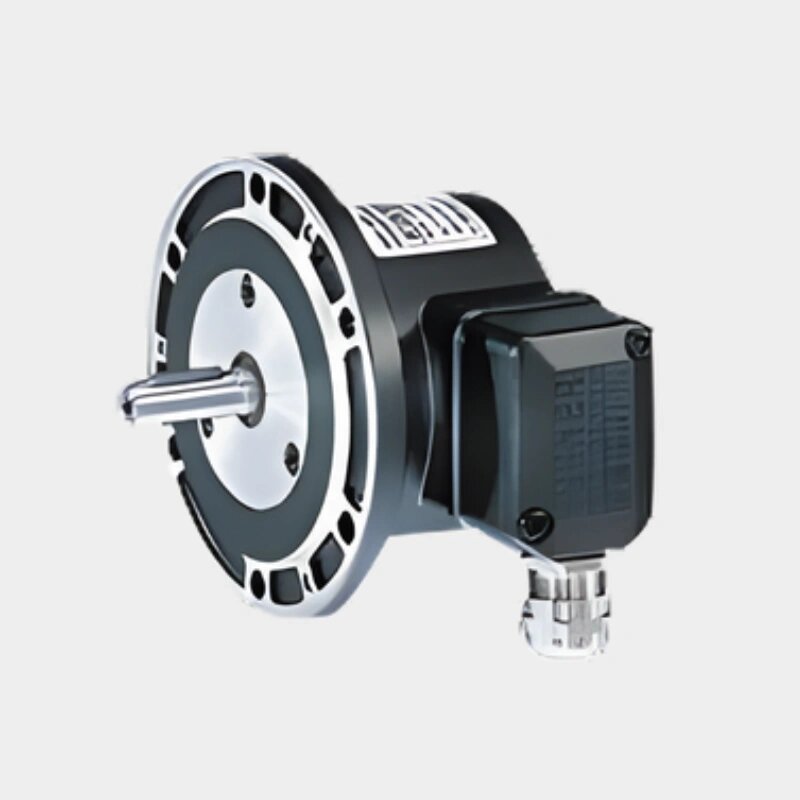
Incremental HeavyDuty encoders from Baumer Hubner deliver precise speed and angular position feedback in the industrial environments that break ordinary sensors — rolling mills, cranes, mining equipment, and large drive systems running 24/7 under constant mechanical stress. Built on more than six decades of engineering from Hübner Berlin, the original developer of HeavyDuty encoder technology, these units combine a double-sided bearing setup, corrosion-resistant housings rated up to category CX (C5-M), and an operating temperature range extending to -40°C (with -50°C available as an option) to keep delivering accurate signals long after standard encoders would have failed. The result is fewer unplanned stops, lower maintenance cost, and process control that stays reliable even as ambient conditions get worse, not better.
Most encoder failures trace back to bearing wear or moisture ingress long before the electronics give out. HeavyDuty encoders address the mechanical side first: bearings are fitted at both ends of the shaft wherever the design allows, spaced generously apart to absorb heavier axial and radial loads than a single-bearing encoder can handle. That translates into meaningfully longer service intervals on equipment that would otherwise need an encoder swap every time a bearing wears out.
Housings are engineered in aluminum or stainless steel with coatings rated to EN ISO 12944 category C4 or CX (C5-M) , the tier of protection typically specified for offshore platforms, coastal cranes, and marine equipment. Combined with a long-term stable sealing design, this keeps the encoder functional in environments where humidity and salt exposure would corrode a standard sensor housing within a year or two.
On motors driven by frequency converters, stray induced currents can pass through an encoder's bearings, pitting the metal and degrading the lubricant over time , a slow failure mode that's easy to miss until the encoder starts producing noisy signals. HeavyDuty encoders counter this with hybrid bearings using ceramic balls (eliminating the current path), optional insulated slip-ring earthing for capacitive discharge, and isolated-hub coupling options on solid-shaft designs , so electrical noise from the drive doesn't quietly shorten the encoder's life.
The SinCos output uses LowHarmonics® technology to produce a near-ideal sinusoidal signal with minimal harmonic content. Cleaner signals mean the downstream drive doesn't have to compensate for encoder-introduced noise, which in practice reduces unnecessary heating in the drive electronics and improves overall energy efficiency , a subtle but real benefit on large, continuously running motors.
Industrial installations often need to run encoder cable well beyond what standard output stages can drive cleanly. HeavyDuty encoders use high-power output drivers capable of reliable transmission up to 350 m on HTL-P and 550 m on TTL, with optical fiber transmission extending that reach up to 1,500 m , useful on large cranes, mills, or plant layouts where the controller sits far from the drive.
Most models carry ATEX certification (Ex II 3G / 3D) for Zone 2 hazardous locations, with select versions certified to ATEX/IECEx Ex II 2G for the more demanding Zone 1. This makes the encoder line usable directly in gas- or dust-hazardous plant areas without needing a separate protection enclosure.
The line supports all common shaft configurations (hollow shaft, cone shaft, and solid shaft with EURO flange B10 , the recognized global mounting standard for HeavyDuty encoders), with connection options via terminal box, M23 flange socket, or direct cable. Output signal formats include HTL-P, TTL/RS422, SinCos 1 Vpp, and optical fiber, so the encoder can be matched to whatever controller interface the application already uses rather than forcing a redesign.
The optional Enhanced Monitoring System (EMS) continuously checks core encoder functions and can flag wiring or connection faults during installation itself , catching mistakes before commissioning rather than after the equipment is running. Encoder status is reported continuously to the controller via a dedicated error output, cutting the time spent chasing down intermittent faults after the fact.
Where a drive needs more than just position and speed , for example, a redundant signal for safety functions, or a combined tacho and speed-switch output , HeavyDuty combination units integrate an encoder, tacho generator, and speed switch onto a single shaft. That avoids stacking multiple separate sensors on one drive shaft, saving panel space while keeping every signal mechanically synchronized.
| Spec | Details |
|---|---|
| Voltage Supply | 5 VDC ±5%; 9–26 VDC; 9–30 VDC |
| Current Consumption (no load) | 100 mA |
| Resolution | 1–1250 steps/turn |
| Phase Shift | 90° ±20° |
| Scan Ratio | 40–60% |
| Reference Signal | Zero pulse, 90° width |
| Sensing Method | Optical |
| Output Frequency | 120 kHz |
| Output Signals | K1, K2, K0 + inverted |
| Output Circuit | TTL/RS422; HTL (power line driver) |
| Interference Immunity | DIN EN 61000-6-2 |
| Emitted Interference | DIN EN 61000-6-4 |
| Approval | UL approval / E256710 |
| Spec | Details |
|---|---|
| Flange Dimensions | 115 mm |
| Shaft Type | 11 mm solid shaft |
| Shaft Loading | 250 N axial / 350 N radial |
| Flange | EURO flange B10 |
| Protection Rating | IP 55 (DIN EN 60529) |
| Operating Speed | 12,000 rpm (mechanical) |
| Operating Torque | Typ. 1 Ncm |
| Rotor Moment of Inertia | 280 gcm² |
| Housing Material | Aluminium die-cast |
| Shaft Material | Stainless steel |
| Operating Temperature | -30°C to +100°C |
| Vibration Resistance | 10 g, 10–2000 Hz (IEC 60068-2-6) |
| Shock Resistance | 100 g, 6 ms (IEC 60068-2-27) |
| Explosion Protection | II3G Ex nA IIC T4 Gc (gas); II3D Ex tc IIIB T135°C Dc (dust) |
| Connection | Terminal box |
| Weight | Approx. 900 g |
Find answers to common questions about our products and solutions.
The core difference is mechanical durability engineered for harsh, continuous-duty environments , a double-sided bearing setup for higher load capacity, corrosion-resistant housings rated to marine-grade standards, a wide operating temperature range, and shock/vibration resistance well beyond what a standard commercial encoder is built to handle.
Bearing wear is one of the most common causes of encoder failure. Supporting the shaft at both ends, where the design allows, distributes radial and axial loads more evenly and gives significantly more mechanical reserve than a single-bearing design, extending service life in applications with continuous heavy loading.
Yes. The housing and coating options are rated to EN ISO 12944 corrosion category C4 or CX (C5-M), suited to near-shore and offshore use, and special variants are available for arctic, tropical, and desert conditions.
Electrical current can pass through an encoder's bearings on VFD-driven motors, damaging the lubricant over time. HeavyDuty encoders address this with hybrid bearings using ceramic balls to break the current path, optional slip-ring earthing for capacitive discharge, and isolated-hub shaft coupling options.
Output drivers support reliable transmission up to 350 m on HTL-P and 550 m on TTL. Where longer runs are needed, optical fiber transmission extends the range up to 1,500 m.
Most models carry ATEX Ex II 3G/3D certification for Zone 2 gas and dust environments, and select versions are certified to ATEX/IECEx Ex II 2G for the more demanding Zone 1.
Hollow shaft, cone shaft, and solid shaft with EURO flange B10 mounting are all supported, with connection via terminal box, M23 flange socket, or direct cable, and output signal formats including HTL-P, TTL/RS422, SinCos 1 Vpp, and optical fiber.
EMS is an optional built-in diagnostic function that continuously checks the encoder's operation and can detect wiring or connection errors during installation itself, shortening both commissioning time and later fault-finding by reporting encoder status directly to the controller.
Tell us about your requirement and our team will get back to you.

The EIL 580 Series Standard Duty Incremental Encoder is a compact optical rotary encoder built for general industrial speed and position feedback where reliable...
Read More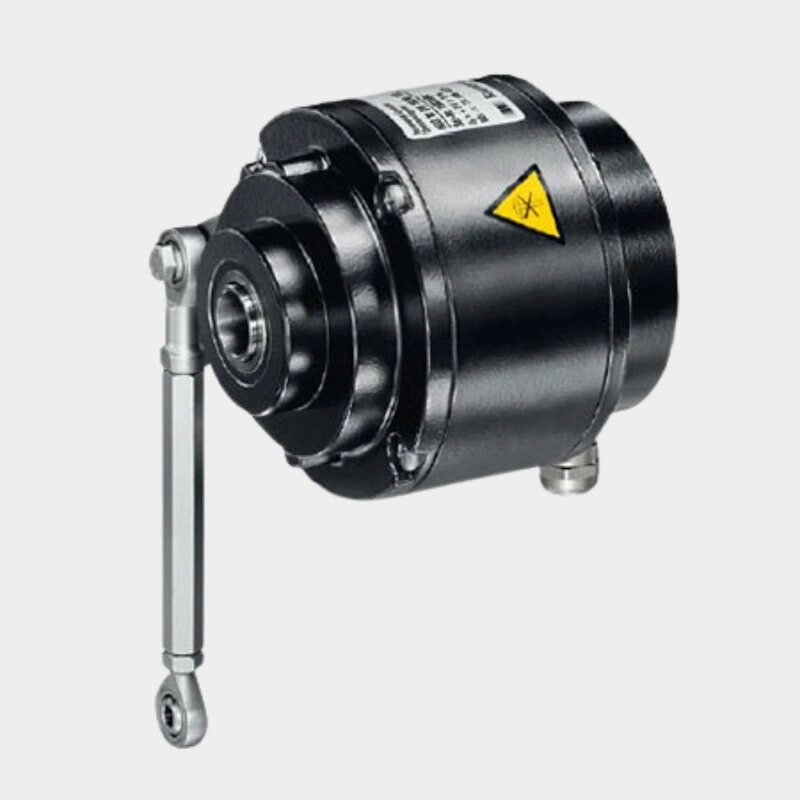
Heavy-duty rotary encoders are hollow-shaft incremental encoders built for monitoring speed and position in drive technology and motion control applications. Ba...
Read More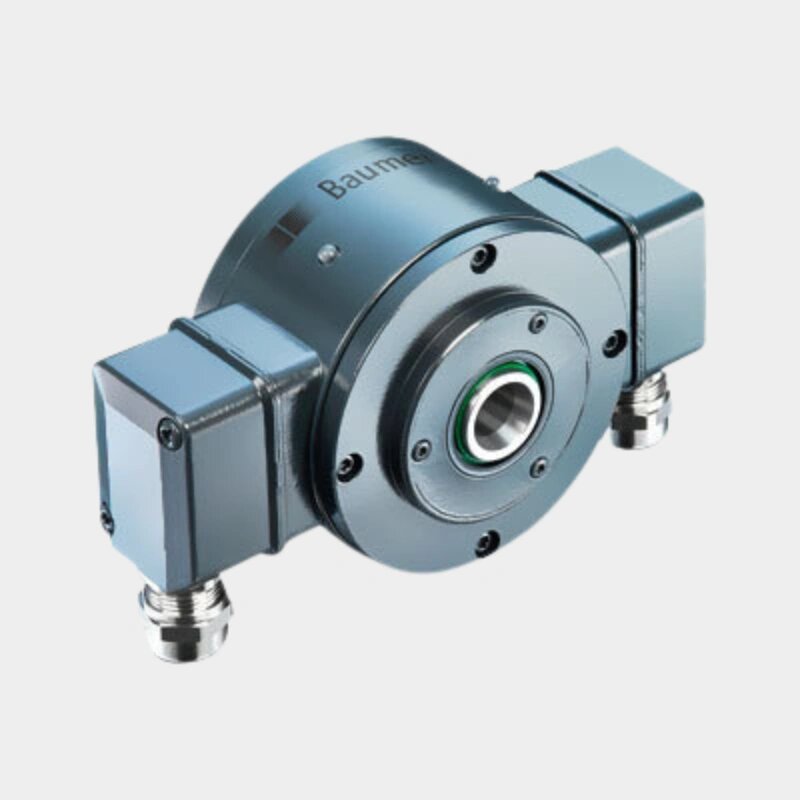
This heavy-duty rotary incremental encoder from Baumer Hubner is built for direct mounting onto a motor shaft, with no coupling required, using a blind hollow s...
Read More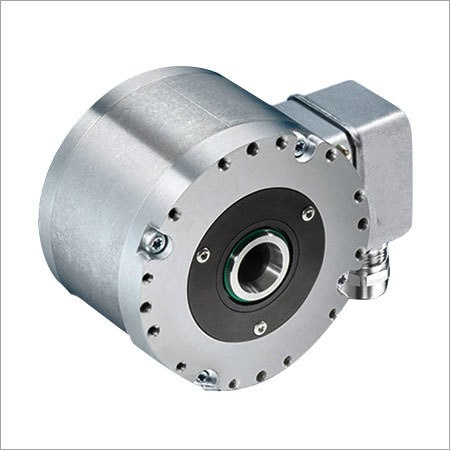
The HOG 86 E is Baumer Hubner's economy-tier entry into the Heavy Duty hollow-shaft encoder range, built to carry over the core mechanical durability of the Hea...
Read More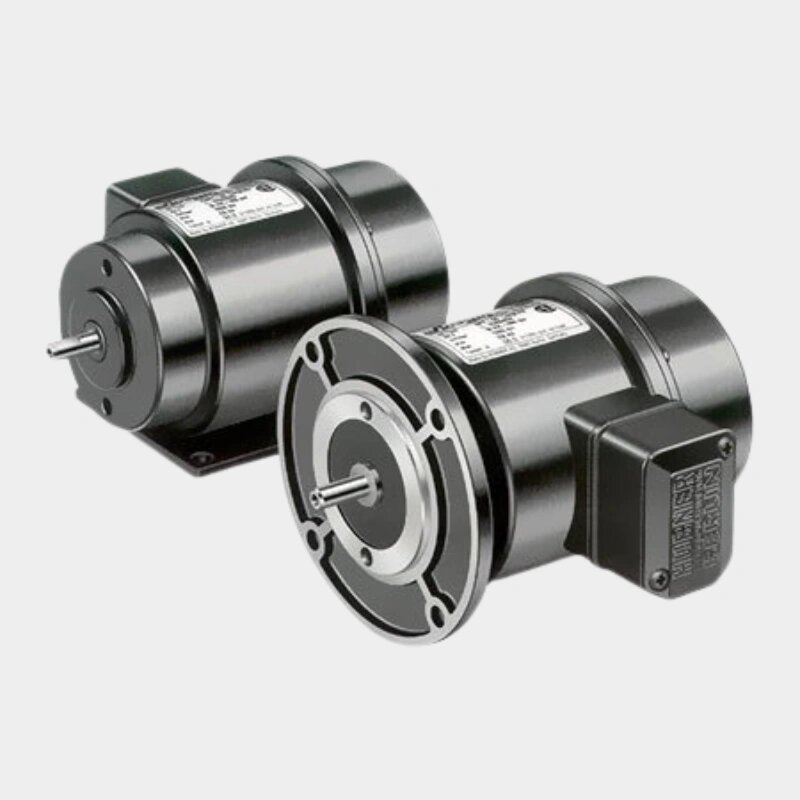
The TDP 0,2 is a DC tachogenerator from Baumer Hubner that produces an analog voltage output directly proportional to shaft speed, no external power supply requ...
Read More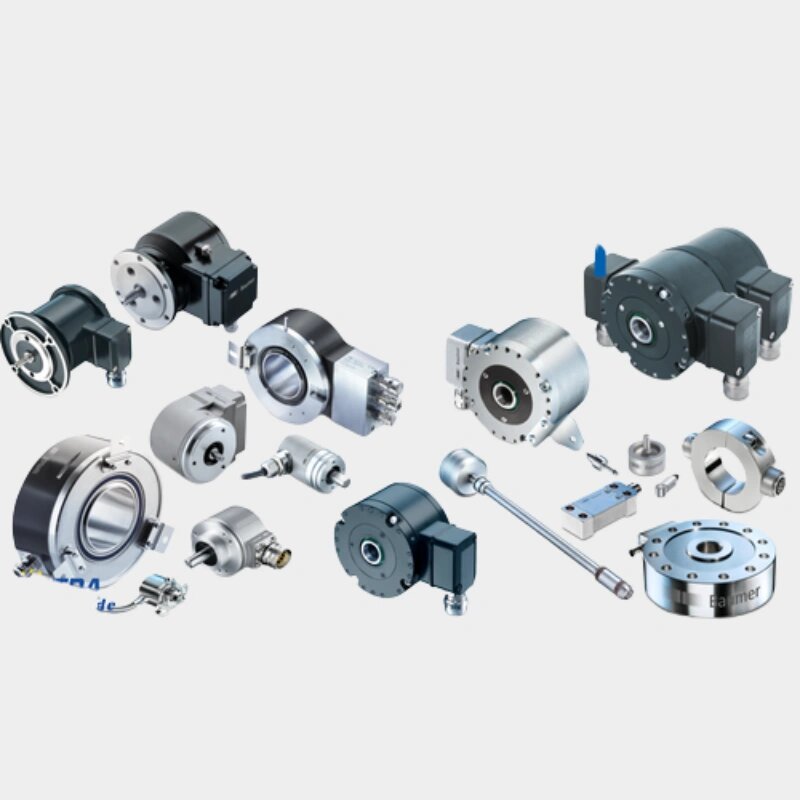
We supply the full Baumer Hubner encoder range, from cost-effective Standard Duty models to full Heavy Duty and Economy Heavy Duty hollow-shaft encoders built f...
Read More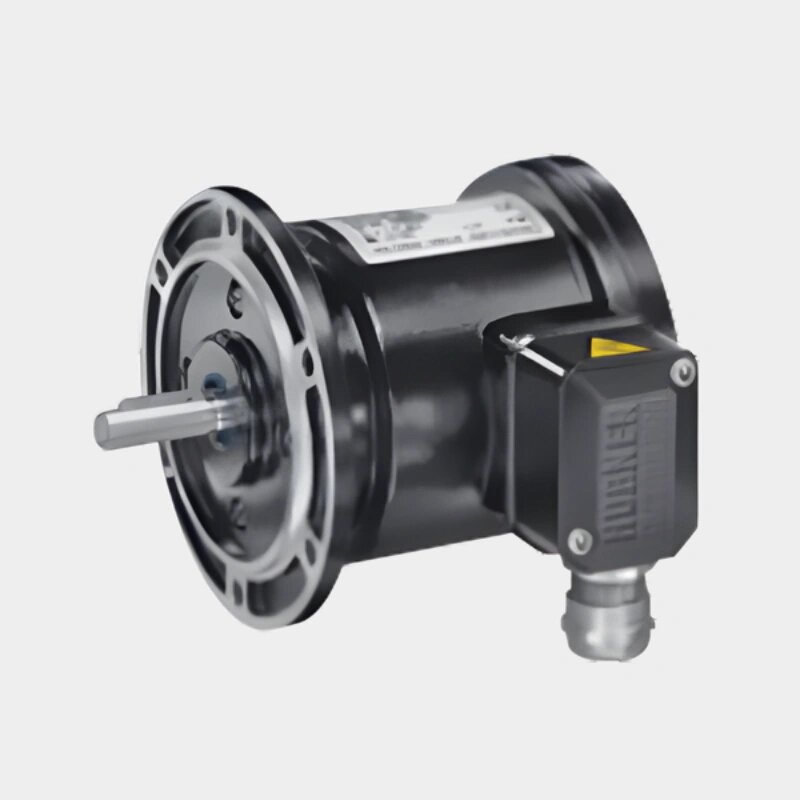
We trade and supply Baumer Hubner optical rotary encoders precision-built for industrial sectors that need both high resolution and serious mechanical resilienc...
Read More
Our team typically responds within a few business hours.
Fill in your details, we'll get back to you shortly.
Fill your details below to start chatting.
Fill your details below, then call us.