
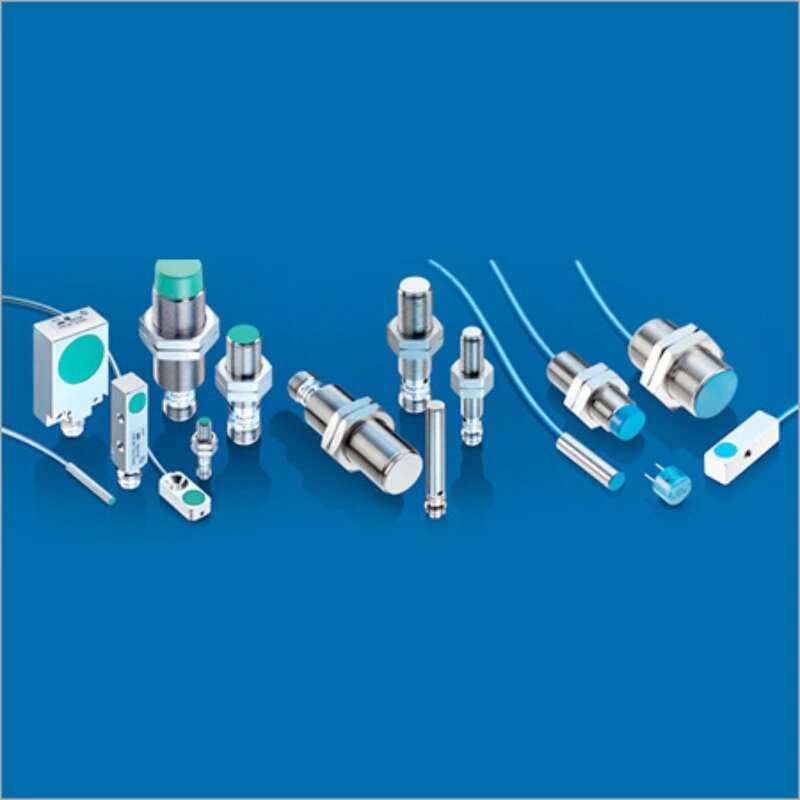
Inductive proximity switches detect metallic objects without any physical contact, an internal oscillator drives a coil that radiates a high-frequency field from the sensing face, and when a metal target enters that field it induces eddy currents that damp the oscillation. The evaluation circuit converts that damping into a clean switching signal. Because there's no mechanical contact, there's no wear from switching, no need to mark the target, and the sensor stays immune to dust, oil, water, and vibration that would degrade a mechanical limit switch over time. Baumer's inductive proximity switch range is the largest sub-category in their object detection lineup, spanning miniature Ø3 mm sensors through high-pressure hydraulic-rated and Ex/ATEX-certified devices, covering general-purpose detection through highly specialized industrial requirements within one product family.
| Housing | Flush (Shielded) | Non-Flush (Unshielded) | Extended Range |
| M5 | 0.8 mm | 1.5 mm | – |
| M8 | 1.5 mm | 2.5 mm | 2–4 mm |
| M12 | 2 mm | 4 mm | 4–8 mm |
| M18 | 5 mm | 8 mm | 8–12 mm |
| M30 | 10 mm | 15 mm | 15–22 mm |
Values are nominal (Sn) for a standard mild-steel target. Non-Factor-1 sensors need reduction factors applied for other materials, approximately stainless 0.7–0.8, brass 0.4–0.5, aluminium 0.35–0.4, copper 0.25–0.35.
| Decision | What Drives It |
| Housing size & shape | Available mounting space; M12/M18 are the volume standards, M5/Ø4 suit grippers and tooling. |
| Flush vs. non-flush | Flush can be embedded level with metal; non-flush needs a clear surrounding zone but gives longer sensing range. |
| Sensing distance | Target the working air gap at roughly 70–80% of Sn to absorb temperature drift and mechanical tolerance. |
| Target material | Non-ferrous or mixed-material targets → choose a Factor 1 sensor. |
| Output & wiring | Match your PLC input card, PNP is the norm on IEC-standard systems; choose IO-Link if you need diagnostics or recipe-based changes. |
| Environment | Welding → weld-immune; washdown → stainless IP69K; hydraulics → high-pressure rated; hazardous area → Ex-rated. |
| Connection | Connector for fast field replacement; fixed cable for tight or moving installations. |
| Family / Variant | Purpose & Distinguishing Feature |
|---|---|
| Standard inductive sensors | General-purpose detection, the volume range. Cylindrical threaded barrels and rectangular blocks, flush (shielded) and non-flush (unshielded). |
| Extended sensing range | Roughly 1.5–2× the standard sensing distance in the same housing size, more installation tolerance, fewer nuisance collisions with the target. |
| Factor 1 (all-metal) | Identical switching distance regardless of target material (steel, stainless, aluminium, brass, copper), removes the need for reduction-factor calculations on mixed-material lines. |
| Weld-field immune | Resistant to strong magnetic fields and weld spatter, with PTFE/ceramic-coated faces, built for resistance-welding cells in automotive body shops. |
| High-pressure | Screws directly into hydraulic cylinders or valve blocks, with a pressure-rated stainless front, used for piston-position sensing. |
| High-temperature | Extended ambient temperature range for ovens, foundries, and drying tunnels. |
| Hygienic / stainless steel | V4A (1.4404) one-piece bodies, washdown-capable, suited to food and pharma environments. |
| Analogue / distance-measuring | Continuous output instead of a simple switch point, for gap, runout, and position measurement. |
| Ring & slot sensors | Detect small parts, screws, or wire passing through an aperture. |
| IO-Link versions | Digital point-to-point communication, remote parameterisation, diagnostics, and device replacement without re-teaching. |
| Ex / ATEX versions | NAMUR or intrinsically safe types for hazardous areas. |
Note: the figures below describe the general range across this product category. Exact specifications vary by individual model, always confirm against the specific datasheet for the article you're selecting.
Find answers to common questions about our products and solutions.
An internal oscillator drives a coil that radiates a high-frequency electromagnetic field from the sensing face. When a metallic target enters that field, it induces eddy currents in the target, which damp the oscillation. The evaluation circuit detects that damping and converts it into a switching signal , all without physical contact.
A flush (shielded) sensor can be mounted level with surrounding metal without affecting its sensing distance, making it more compact to install. A non-flush (unshielded) sensor needs a clear zone around the sensing face, but in exchange offers a longer sensing distance for the same housing size.
A Factor 1 (all-metal) sensor gives the same switching distance regardless of target material , steel, stainless steel, aluminium, brass, or copper. Standard sensors need a reduction factor applied for non-ferrous or mixed-material targets, which a Factor 1 sensor eliminates.
Weld-field immune sensors, built with PTFE or ceramic-coated faces and resistance to strong magnetic fields and weld spatter, are purpose-built for resistance-welding environments like automotive body shops.
IO-Link provides a digital point-to-point communication link, enabling remote parameterisation, diagnostics, and , notably , device replacement without needing to re-teach sensing distance or settings on the new unit.
As a rule of thumb, target your actual working air gap at roughly 70–80% of the sensor's rated nominal sensing distance (Sn), which gives enough margin to absorb temperature drift and normal mechanical tolerance.
The housing, sensing distance, and electrical figures in this overview describe the general range across the category and are intended as a guide. Exact specifications differ by individual article , always confirm against the specific datasheet for the model you're selecting before finalizing a purchase or design.
Ex/ATEX-rated versions are available in NAMUR or intrinsically safe configurations, in addition to the standard CE/UKCA, cULus, and RoHS approvals carried across the general range.
Tell us about your requirement and our team will get back to you.
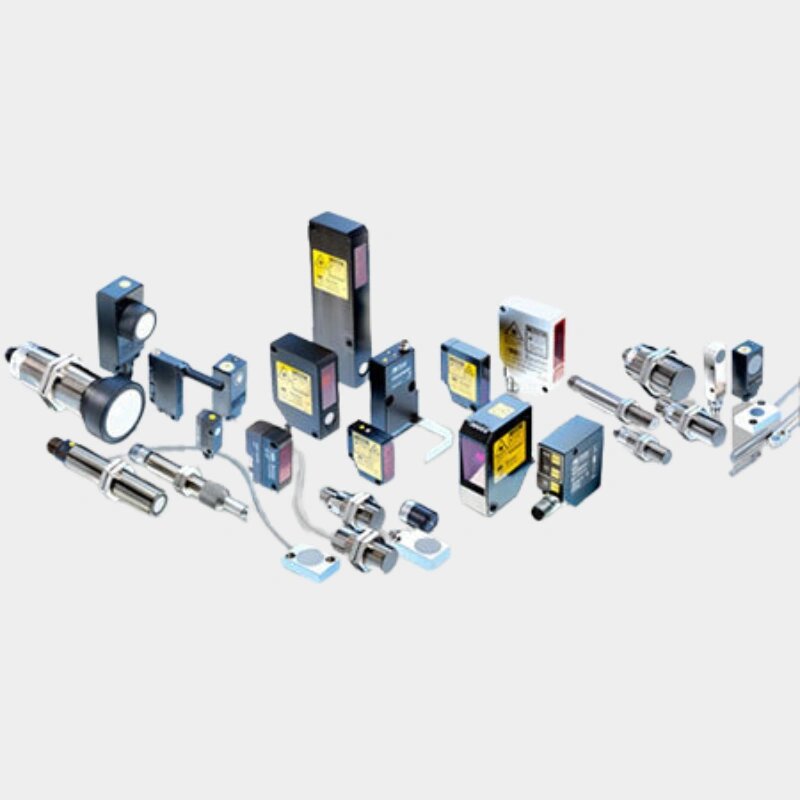
We supply the complete Baumer sensor and automation component range , from basic presence detection through precision rotary encoders, process instrumentation,...
Read More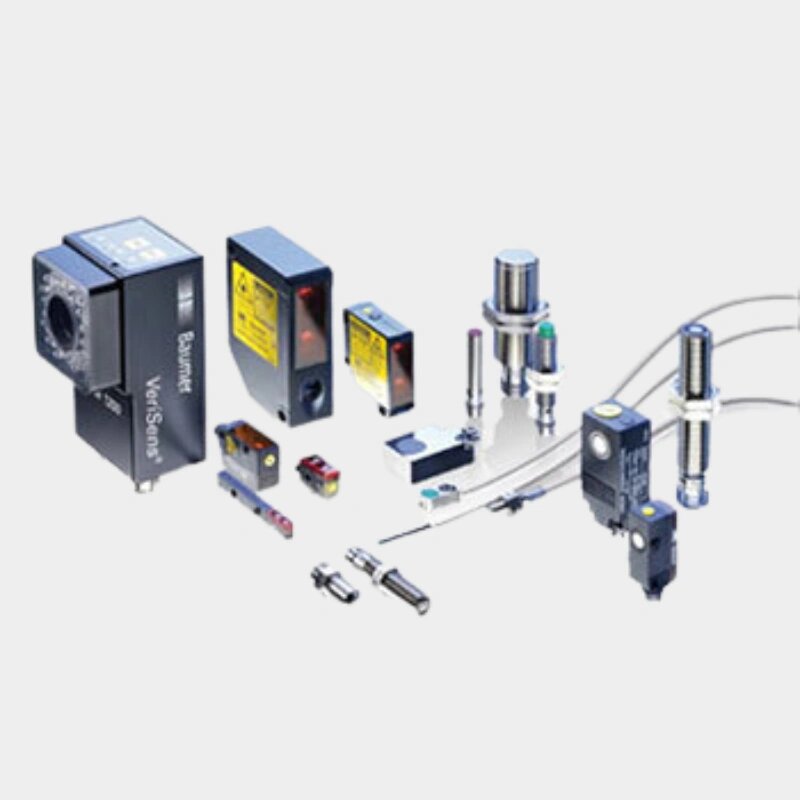
Baumer Vision Sensors bring machine vision to inspection, sorting, measurement, and positioning tasks without requiring a full custom vision-programming setup....
Read More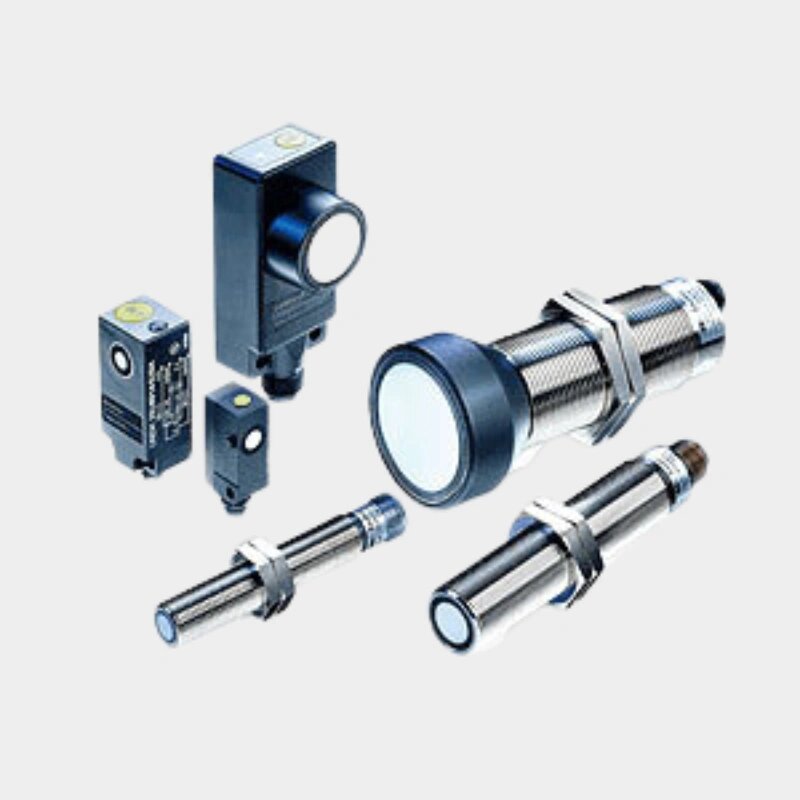
Baumer's NexSonic ultrasonic sensors detect and measure objects using the time-of-flight principle, emitting high-frequency sound waves and measuring how long t...
Read More
Our team typically responds within a few business hours.
Fill in your details, we'll get back to you shortly.
Fill your details below to start chatting.
Fill your details below, then call us.