
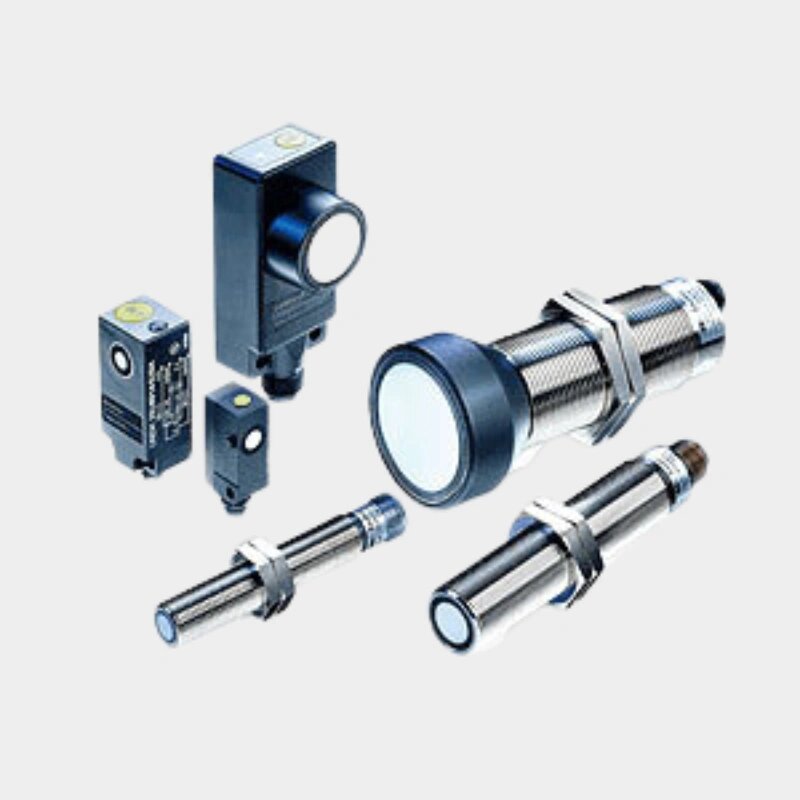
Baumer's NexSonic ultrasonic sensors detect and measure objects using the time-of-flight principle, emitting high-frequency sound waves and measuring how long they take to bounce back off a target. Because detection doesn't depend on the object's color, transparency, or surface finish, ultrasonic sensing handles targets that regularly defeat optical sensors: clear film, glossy black surfaces, uneven bulk material, and reflective glass edges among them. NexSonic is Baumer's latest-generation sensing technology, built into the full current ultrasonic lineup (UF200, UF300, U300, UR12, U500, UR18), and it's specifically engineered to close the gap between two numbers that normally trade off against each other in ultrasonic sensing: blind range (how close an object can get before the sensor can't see it) and detection range (how far away it can still detect reliably). NexSonic sensors push blind range down to as little as 10 mm while extending detection range up to 3000 mm in the same product family — a ratio Baumer positions as best-in-class against conventional ultrasonic sensors.
Baumer's broader ultrasonic toolbox extends further, with variants including:
Response time as fast as 10 ms lets these sensors keep up with fast-moving objects — detecting ruptures in transparent film at full belt speed, for example, where a slower sensor would miss the event entirely or blur the detection point.
Every NexSonic series is built around the best available ratio of blind range to detection range — as little as 10 mm of blind range paired with up to 3000 mm of detection range on the same sensor family, meaning the sensor can be mounted close to the process without losing reach.
Configurable via IO-Link, the filter settings let a single sensor be tuned to very different jobs:
The sensor's detection cone can be set to narrow, medium, or wide via IO-Link — narrow to sense through a small opening without picking up surrounding structure, or wide to cover a broader area when precise targeting isn't the priority.
Because detection relies on sound reflection rather than light, NexSonic sensors deliver consistent, repeatable results on targets that are notoriously inconsistent for optical sensors — transparent foils, ultra-black structured surfaces such as tires, and objects in dusty, dirty, or moist environments where optical lenses would need constant cleaning.
Baumer's ultrasonic sensors use a purpose-built sensor element paired with a custom-developed ASIC, Application-Specific Integrated Circuit, with the piezo element connected directly to the matching layer/membrane rather than through a longer signal path. That direct connection delivers several practical benefits:
Distance-related gain control keeps signal quality consistent across the entire detection range while simultaneously helping minimize blind range — the combination that gives NexSonic sensors their class-leading detection-to-blind-range ratio.
| Function | Family / Model | Housing | Sensing Distance | Blind Range | Response Time (min) |
|---|---|---|---|---|---|
| Proximity | U300.P50 | Cubic, miniature | 500 mm | 15 mm | 16 ms |
| Proximity | UF200.P25 | Cubic, ultra flat | 250 mm | 10 mm | 10 ms |
| Proximity | UF200.P50 | Cubic, ultra flat | 500 mm | 15 mm | 16 ms |
| Proximity | UF200.PA0 | Cubic, ultra flat | 1000 mm | 20 mm | 24 ms |
| Proximity | UF300.P25 | Cubic, ultra flat | 250 mm | 10 mm | 10 ms |
| Proximity | UF300.P50 | Cubic, ultra flat | 500 mm | 15 mm | 16 ms |
| Proximity | UF300.PA0 | Cubic, ultra flat | 1000 mm | 20 mm | 24 ms |
| Proximity | UF300.PC0 | Cubic, ultra flat | 3000 mm | 50 mm | 56 ms |
| Proximity | UR12.P50 | Round, miniature | 500 mm | 15 mm | 16 ms |
| Retroreflective | U200.R50 | Cubic, miniature | 500 mm | – (±5% reflector tolerance) | 16 ms |
| Retroreflective | UF200.R25 | Cubic, ultra flat | 250 mm | – | 10 ms |
| Retroreflective | UF200.R50 | Cubic, ultra flat | 500 mm | – | 16 ms |
| Retroreflective | UF200.RA0 | Cubic, ultra flat | 1000 mm | – | 24 ms |
| Retroreflective | UF300.RA0 | Cubic, ultra flat | 1000 mm | – | 24 ms |
| Retroreflective | UF300.PC0 | Cubic, ultra flat | 3000 mm | – | 56 ms |
| Retroreflective | UR12.R50 | Round, miniature | 500 mm | – | 16 ms |
| Distance | U300.D50 | Cubic, miniature | 500 mm | 15 mm | 16 ms |
| Distance | UF200.D25 | Cubic, ultra flat | 250 mm | 10 mm | 10 ms |
| Distance | UF200.D50 | Cubic, ultra flat | 500 mm | 15 mm | 16 ms |
| Distance | UF200.DA0 | Cubic, ultra flat | 1000 mm | 20 mm | 24 ms |
| Distance | UF300.D25 | Cubic, ultra flat | 250 mm | 10 mm | 10 ms |
| Distance | UF300.D50 | Cubic, ultra flat | 500 mm | 15 mm | 16 ms |
| Distance | UF300.DA0 | Cubic, ultra flat | 1000 mm | 20 mm | 24 ms |
| Distance | UF300.DC0 | Cubic, ultra flat | 3000 mm | 50 mm | 56 ms |
| Distance | UR12.D50 | Round, miniature | 500 mm | 15 mm | 16 ms |
| Through-Beam | U300.EA0 | Cubic, miniature | 1000 mm | n/a | 2 ms |
| Through-Beam | UF200.EA0 | Cubic, ultra flat | 1000 mm | n/a | 2 ms |
| Through-Beam | UF200.EB0 | Cubic, ultra flat | 2000 mm | n/a | 9 ms |
| Through-Beam | UF300.EA0 | Cubic, ultra flat | 1000 mm | n/a | 2 ms |
| Through-Beam | UF300.EB0 | Cubic, ultra flat | 2000 mm | n/a | 9 ms |
| Through-Beam | UR12.EA0 | Round, miniature | 1000 mm | n/a | 2 ms |
Proximity, Retroreflective, and Distance function types offer adjustable sonic cone settings wide/medium/narrow; Through-Beam types offer distance settings long/medium/short. Retroreflective models carry a reflector tolerance of ±5%. Response times listed are minimum values.
Find answers to common questions about our products and solutions.
They use the time-of-flight principle — emitting a high-frequency sound wave and measuring how long it takes to reflect back off the target. Because detection relies on sound rather than light, it works reliably on transparent, reflective, dark, or irregularly shaped objects that often challenge photoelectric sensors.
NexSonic technology is built to deliver the best available ratio of blind range to detection range in its class — as little as 10 mm of blind range combined with up to 3000 mm of detection range within the same product family, along with fast response times, smart filtering, and IO-Link configurability.
Both are ultra-flat (15 mm housing) sensors for front-mount installation. The UF200 has a very short 10 mm blind range, suited to close-mounted applications. The UF300 extends detection range up to 3000 mm, trading a slightly larger blind range (50 mm at maximum range) for significantly more reach.
The U500 and UR18 are built specifically for robustness, with a PEEK-coated sensor element that meaningfully increases chemical and wear resistance compared to the standard lineup.
Yes. Sonic cone width (narrow/medium/wide) and filter behavior (interruption filter, strong filtering, or no filtering) are configurable via IO-Link, letting the same sensor be tuned to different applications without needing a hardware change.
It's designed to ignore a known interfering object within the sensor's field of view — for example, a rotating agitator inside a tank — so the sensor doesn't generate false detections from something that's expected to be there.
Response times as fast as 10 ms are available, and filtering can be turned off entirely for applications like detecting film ruptures at full belt speed, where any added filtering delay would blur the detection.
The U300 miniature sensor measures just 12.9 × 23 × 32.2 mm, and Baumer's broader ultrasonic range includes variants as small as 10 × 14 × 27 mm for the tightest installation constraints.
Tell us about your requirement and our team will get back to you.
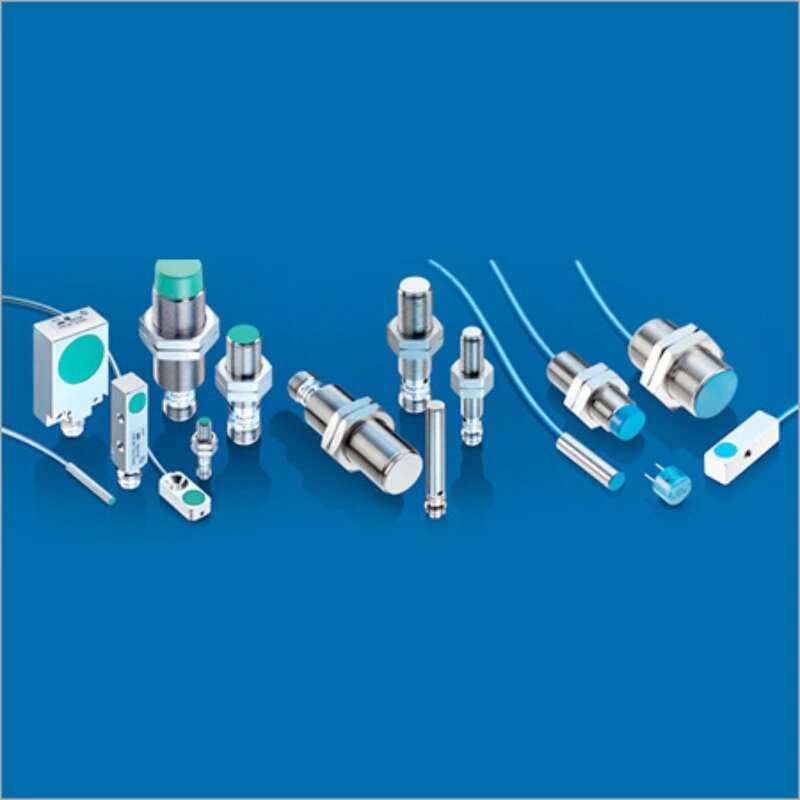
Inductive proximity switches detect metallic objects without any physical contact, an internal oscillator drives a coil that radiates a high-frequency field fro...
Read More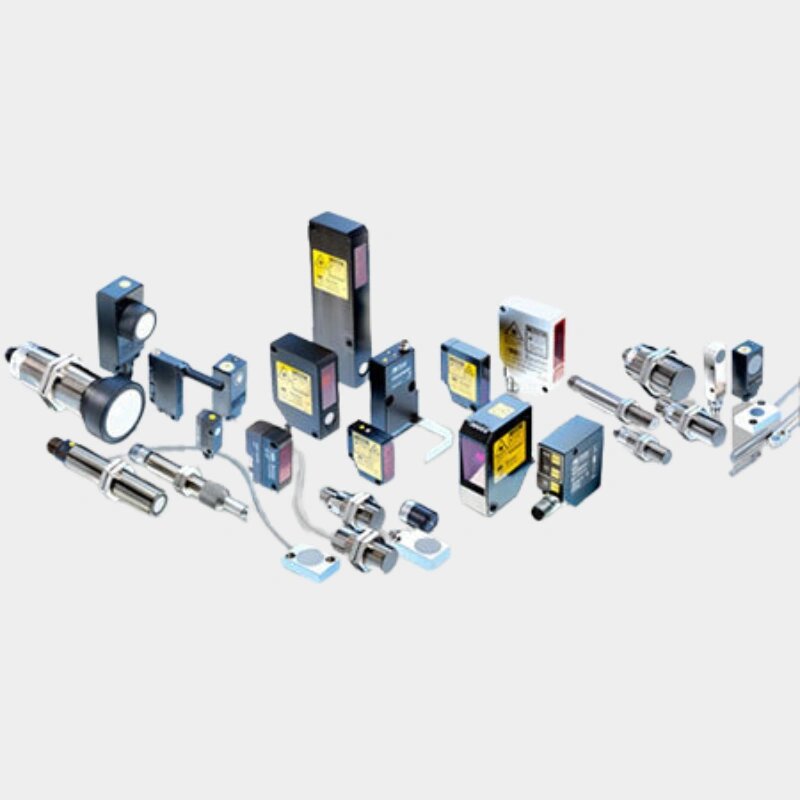
We supply the complete Baumer sensor and automation component range , from basic presence detection through precision rotary encoders, process instrumentation,...
Read More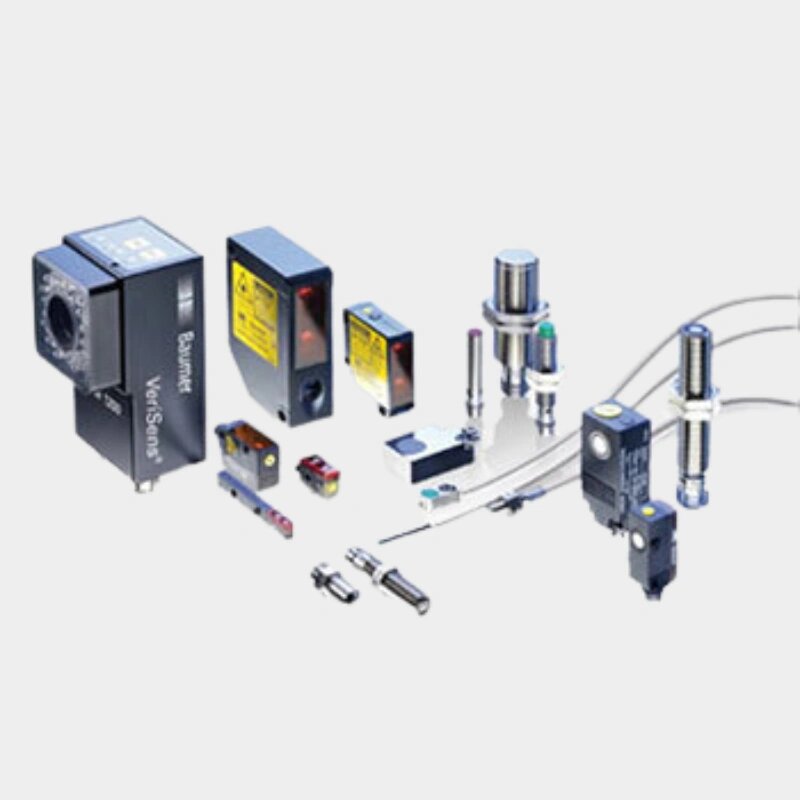
Baumer Vision Sensors bring machine vision to inspection, sorting, measurement, and positioning tasks without requiring a full custom vision-programming setup....
Read More
Our team typically responds within a few business hours.
Fill in your details, we'll get back to you shortly.
Fill your details below to start chatting.
Fill your details below, then call us.